Showing posts with label Black-Crowned Night Heron. Show all posts

Wednesday, January 15, 2025

Chill Start to the New Year


I was eager to get in an early 2025 nature outing so on Jan. 9 I cleared my schedule and headed south down to the ACE Basin.

It was clear cold day with temperatures in the 39-41 degrees range. I felt it in my hands while walking around looking for birds to photograph. 


I knew the Bear Island Wildlife Management Area might be closed, and it was for periodic hunting. 


But I also knew that I could still check out Mary’s House Pond, which is accessible after parking in the entrance area. 

Having been to Bear Island many times (see this post when we took bicycles out there!), the large pond attracts many birds, especially migratory ones in the winter. 


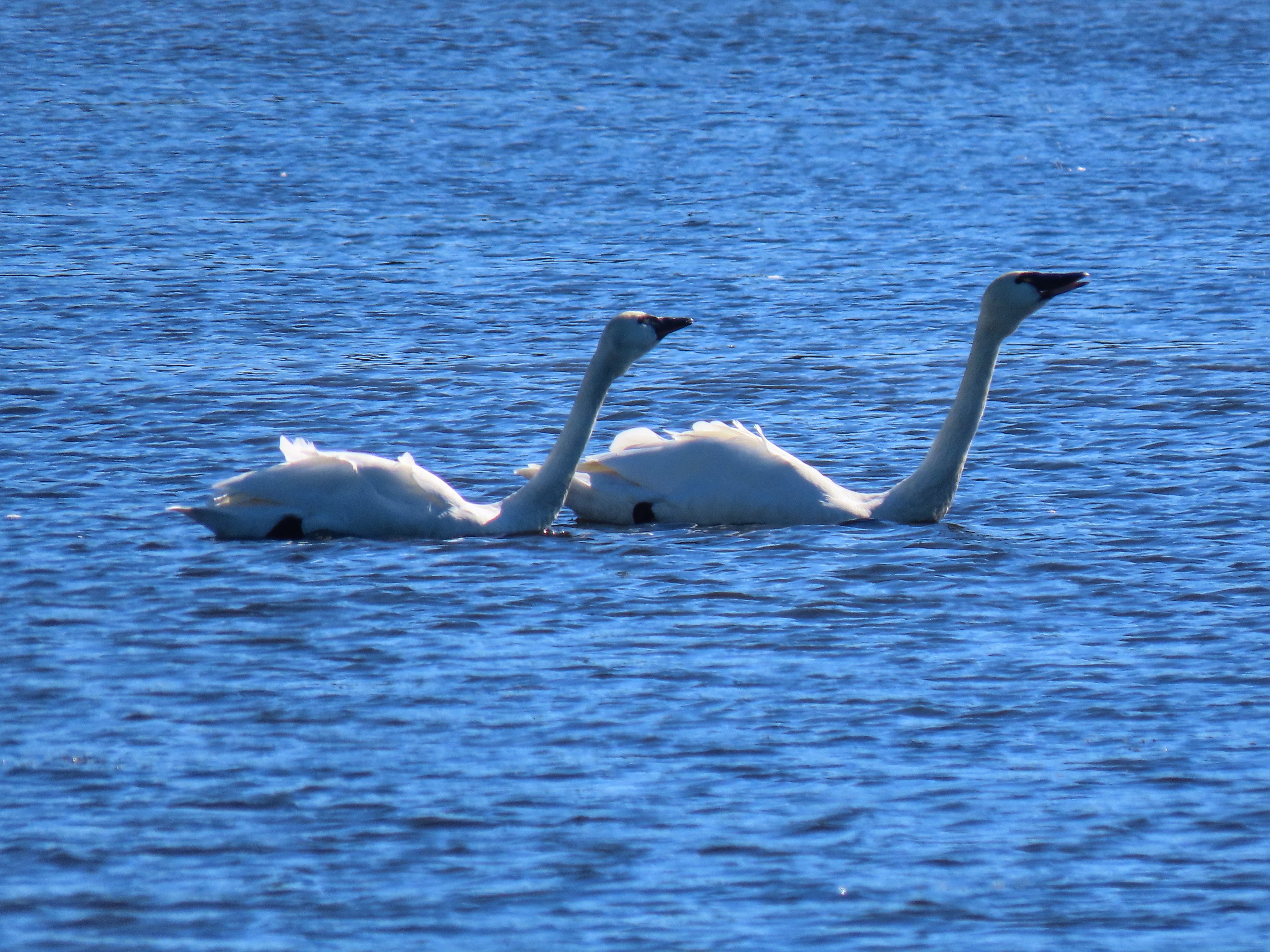
I would not be disappointed! Tundra Swans were the stars of the show. 


Tundras are North America’s most common swan but you don’t see them too often in the S.C. Lowcountry. They breed in Canada and Alaska and migrate to the Pacific and Atlantic coasts during the winter. 

Here at Bear Island is the only place I have seen this big beauty. 


Friday, November 15, 2024

Birds Galore at Magnolia Cemetery!


The photographer got photographed on Nov. 8 at Magnolia Cemetery! 

Gary Eaton snapped this image of me doing my thing from my perch on the bridge. A few years ago Gary founded the popular Facebook site “Magnolia Cemetery Photographer’s Group.” I was pleased to meet Gary on this day as well as another photographer named Catherine. 


There were quite a few birds to see from the long bridge at Magnolia Cemetery. Here are a pair of Wood Storks, a trio of White Ibis and a Black-crowned Night Heron. 


It had been a while since I’d seen a Black-crowned Night Heron. 


Tuesday, February 14, 2017

"Hoodie" Delights at Magnolia Cemetery!

A stop this past Saturday at Charleston's Magnolia Cemetery on the way home from some downtown activities resulted in a bounty of bird photographs.

I was pleased to see so many Hooded Mergansers in the front lagoon. For years now, they have migrated here from their northern climes, coming around October-November. They'll stay until March-April before returning home.


Sunday, January 23, 2011

Black-Crowned Night Heron


The mysterious Black-Crowned Night Heron is an unusual looking creature that is rare to come across.

I know it doesn't-- but it occurs to me:  Does this bird have a little penguin in it???

A Black-Crowned Night Heron party in a tree at Charleston's Magnolia Cemetery.
To me the adults have two distinctive characteristics:  those blazing red eyes and the long black strip along its head and back, hence the black-crowned moniker. Below: In flight- the Black-Crowned Night Heron

The Black-Crowned Night Heron is considered medium-sized (23-28 inches long), stocky, short necked.

Notice the white plumes on the above left heron.  The male and female aduts are considered identical as far as appearance from a distance.

This bird does its feeding at night, thus the "night" part of its name.  During the day, they can be seen and seem active only when flying away from me and my camera!

Another interesting thing about the Black-Crowned Night Heron is how the young ones or juveniles look so much differently than their parents.  They do share the red eyes (above). They go through some major transformation to eventually take on the black and white look of the adult. 

The juvenile (below) resembles the American Bittern.  But the different eye color helps differentiate the two. 

I've followed this family of Black-Crowned Night Herons for a few months now at Charleston's Magnolia Cemetery.  They have been enjoyable to observe and challenging to photograph.  They do readily mix with other species such as the White Ibis below, and with a Brown Pelican in the photo after that.

Photo (below) an adult Night Heron shares a pond tree with several Ibis, including some jueveniles of that breed
Black-Crowned Night Herons- for more about this cool customer, see WhatBird.com